Trainwatch blends gatekeeping routine with slow-burning psychological dread
Trainwatch, from Harvester Games, casts players as Troy, a solitary gatekeeper trying to rebuild his life through a month-long job at a fogbound crossing, setting it apart from the scene-driven dread of The Cat Lady. The app mixes routine time-management, operating crossing gates and tending the tower, with survival needs such as hunger, exhaustion, and sobriety, while supernatural intrusions interrupt the daily rhythm. It offers branching endings, a dynamic day/night cycle, sanity and stamina meters, and full English voice acting for players who favor slow psychological simulations.
What kind of experience does it aim to create?
The game positions itself as a hybrid of job simulation and psychological horror, built around a protagonist seeking redemption and isolation. The developer frames tension through mundane repetition rather than spectacle, so the emotional core is investigative and reflective. Players step into a maintenance role that gradually reveals uncanny occurrences, a design choice that foregrounds character study and atmosphere over traditional jump scares.
Does the design demand constant resource juggling?
Yes. Survival mechanics require attention to bodily and mental gauges that influence how Troy performs his duties, and those meters can restrict or enable actions at key moments. The semi-open layout around the crossing provides room to explore, but the underlying systems keep the routine meaningful by tying choices to the protagonist’s condition. That interplay makes each day a balance between tasks and preservation.
What does the game look and sound like?
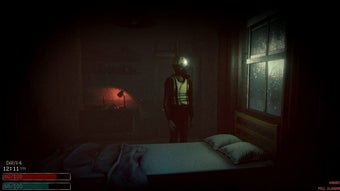
Visuals favor a fogbound, 1990s-inspired palette that keeps horizons vague and details muted, which reinforces unease while exploring. Audio design uses atmospheric cues and environmental noise to signal shifts in mood, and spoken English dialogue anchors Troy’s character throughout encounters. The combined presentation leans on mood and voice performance to deliver psychological weight rather than high-fidelity spectacle.
What drives replay and lasting interest?
Replayability rests on branching narrative paths and multiple distinct endings, which respond to choices and the passage of time under a dynamic day/night rhythm. The semi-open environment and time-dependent events create different opportunities in subsequent runs, encouraging players to test decisions and see alternate outcomes. That structure rewards attention to consequence and patient investigation across playthroughs.
In summary, a measured psychological simulation best for contemplative players
Trainwatch is a deliberate choice for players who prefer character-led dread and slow investigative pacing over fast action or competitive modes. It asks for patience and sustained focus on mood and consequence, so those seeking immediate thrills or social play will likely find a mismatch. For anyone who values atmosphere and narrative experimentation, it offers a distinct, personality-driven experience.